Hardwood, Laminate, Vinyl, Tile & Carpet
If you’re planning a remodel, flooring is one of those decisions that seems simple, until you start looking at options. Hardwood, laminate, vinyl, tile and carpet look great in the showroom, but how do you know what will actually work in your home? Here’s a practical flooring buying guide to help you decide.
I’ve worked in homes across Naperville area for decades, and one thing I’ve learned is this: the best flooring choice isn’t just about style. It’s about how you live in your space, from kids, pets, entertaining, and everything in between.
Hardwood Flooring: Timeless, but Not for Every Space
Hardwood is often the first thing homeowners think of and for good reason. It’s warm, natural, and adds long-term value to your home.
| Pros | Cons |
| Classic, timeless look | Sensitive to moisture and humidity |
| Can be refinished over time | Can scratch or dent over time |
| Strong resale value | Higher upfront cost |
Best for: Living rooms, dining rooms, and bedrooms
In Naperville homes, hardwood is still one of the most requested options for main living spaces. But we steer homeowners away from using it in bathrooms or basements where moisture is a concern.
Laminate Flooring: Budget-Friendly and Durable
Laminate has come a long way in recent years. It’s designed to mimic wood but at a more approachable price point.
| Pros | Cons |
| Cost-effective alternative to hardwood | Can’t be refinished |
| Resistant to scratches and wear | Doesn’t have the same natural feel as wood |
| Easy to maintain | Lower long-term value |
Best for: Bedrooms, living areas, and lower-traffic spaces
If you’re trying to balance budget and appearance, laminate can be a solid option especially in homes with kids or pets.
Vinyl Flooring (LVP/LVT): Practical and Versatile
Luxury vinyl plank (LVP) and tile (LVT) have become one of the most popular flooring choices and it’s easy to see why. For many Naperville homeowners, vinyl is the go-to for spaces where durability matters most. It gives you the look of wood with far less maintenance.
| Pros | Cons |
| Highly water-resistant (great for kitchens and basements) | Doesn’t add the same resale value as hardwood |
| Durable and scratch-resistant | Quality can vary depending on the product |
| Comfortable underfoot |
Best for: Kitchens, basements, mudrooms, and bathrooms
Tile Flooring: Durable and Built to Last
Tile is one of the most durable flooring options available, especially in high-moisture areas. I often recommend tile in spaces where water and heavy traffic are part of everyday life. It’s not always the coziest option, but it’s one of the most practical.
| Pros | Cons |
| Extremely water-resistant | Can feel cold and hard underfoot |
| Long-lasting and durable | Installation is more labor-intensive |
| Great for radiant heating systems | Grout requires maintenance over time |
Best for: Bathrooms, kitchens, mud rooms and entryways
Carpet: Comfort Where It Counts
Carpet still has its place and especially in areas where comfort matters most. For many families, carpet is still the preferred choice in bedrooms. It creates a softer, quieter space that feels comfortable day to day.
| Pros | Cons |
| Soft and comfortable | Stains more easily |
| Warmer underfoot | Requires more maintenance |
| Helps with sound absorption | Wears faster in high-traffic areas |
Best for: Bedrooms, basements, and family rooms
How Flooring Fits Into the Bigger Picture
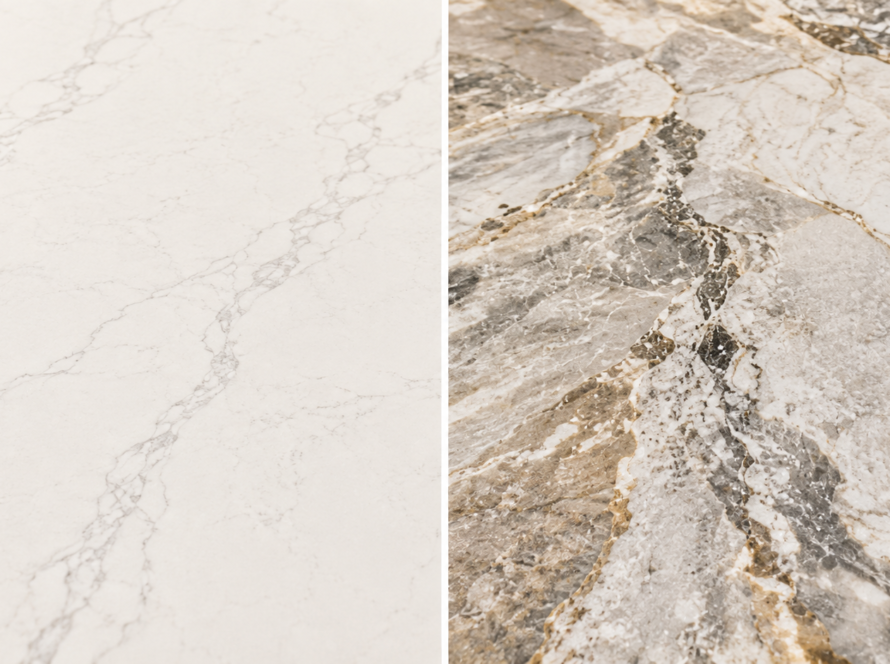
One thing I remind homeowners is that flooring doesn’t exist in isolation. It needs to work with everything else in your home, from cabinetry and wall color to finishes like countertops, including granite and other surfaces. When you’re planning a kitchen remodel, for example, your flooring should complement your cabinets and countertops, not compete with them. It’s these small details that make a space feel cohesive.
What’s the Right Choice for You?
There’s no one-size-fits-all answer and that’s okay. The right flooring depends on:
- How you use each room
- Your budget and timeline
- Your design preferences
- How much maintenance you’re comfortable with
What I’ve seen over the years is that the best results come from thinking about your home as a whole, not just one surface at a time. If you’re starting to explore options, it helps to see materials in person and talk through real-life scenarios. We’ve guided homeowners across Naperville and Aurora areas through this process many times, and sometimes a quick conversation can bring a lot of clarity.
At the end of the day, your floors should do more than look good. They should support how you live, feel comfortable, and hold up over time. Browse our flooring material options to find your right fit.